
Hip Academy - PDF Resource Inclusions
Hip Academy provides exclusive access to a growing library of invaluable clinical PDF Resources (OVER 260 PAGES)
Only available to Hip Academy members, these downloadable and printable resources are usually 2-6 pages of focused 'apply-in-the-clinic-today' content
Our members love having easy access to these 'cheat-sheets' that serve as a quick reminder in clinic or as prompts for group training sessions
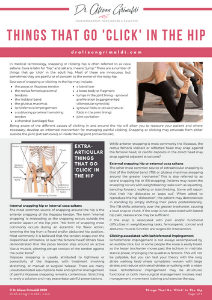
Clinical Resources - General
Downloadable and printable easy-reference pdf resources covering a wide variety of topics around conditions and management approaches for hip and pelvic conditions.
Includes: Multi-page full colour pdfs, with more to come.
Valued at $95. Only available for Hip Academy Members.
Prevention of Femoral Malversion
The hip and pelvic floor – Anatomical and functional relationships
Greater trochanteric pain after hip replacement
Surgical and Rehab predictors of failed hip arthroscopy
Patient predictors of failed hip arthroscopy
Modifying Leg Press For Hip Pain
Modifying Deadlifts For Hip Pain
Modifying RFESS For Hip Pain
3 Yoga Poses to Modify For Hip Pain
3 Pilates Exercises To Reconsider for Hip Pain
The Quest for Goldilocks Glutes
Getting to the Bottom of Buttock Pain
Acetabular Dysplasia a 3D deficiency
Things that go click in the hip
Iliopsoas impingement after THR
How many syndromes can a buttock have?
Total Hip Replacement – Is it time yet
Surgical management of hip OA Clinician Resource
Sacroiliac joint related pain
Acetabular Dysplasia Development and Prevention
Cam Morphology Development and Prevention
Femoral Malversion Development and Prevention
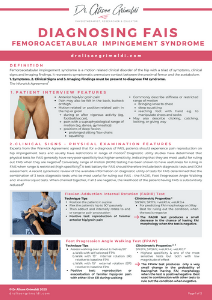
Clinical Resources - Diagnosis
Downloadable and printable cheat-sheets outlining patient interview features and physical features of various hip and pelvic conditions. Includes test batteries, technique tips and clinimetrics.
Includes: Multi-page full colour pdfs with more to come.
Valued at $130. Only available for Hip Academy Members.
Diagnosing Adductor Related Groin Pain
Local Versus Lumbar Tips for Differential Diagnosis of Upper Buttock Pain
Local Versus Lumbar Tips for Differential Diagnosis of Mid Buttock Pain
Local Versus Lumbar Tips for Differential Diagnosis of Lower Buttock Pain
Diagnosing Gluteal Tendinopathy
Diagnosing Anterior Instability
Diagnosing Posterior Hip Instability
Diagnosing FAIS
Diagnosing Sacroiliac Joint Related Pain
Diagnosing IFIS
Diagnosing Deep Gluteal Syndrome
Differential Diagnosis of Anterior Hip Pain Part 1
Differential Diagnosis of Anterior Hip Pain Part 2
Identifying Joint Hypermobility and Diagnosing Hypermobile Ehlers Danlos Syndrome & Hypermobility Spectrum Disorders
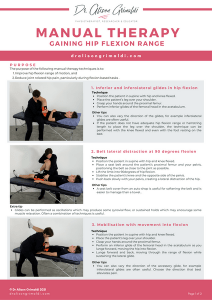
Clinical Resources - Treatment Strategies
Downloadable and printable treatment strategy resources. This section is starting with some muscle and joint techniques and will grow to include guides for exercise prescription around the hip and pelvis.
Includes: Multi-page full colour pdfs, with more to come.
Valued at $40. Only available for Hip Academy Members.
Post-Operative Rehabilitation Hip Arthroscopy
Prehab & Rehab after Hip Arthroplasty
Manual therapy - gaining hip flexion range
Manual therapy - gaining internal rotation range
Manual therapy - longitudinal distraction techniques
Self mobilisations joint techniques for home
Management strategies for gluteal overactivity
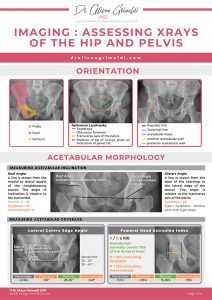
Clinical Resources - Imaging
Downloadable and printable guides to imaging assessment of the hip and surrounding musculature. Detailed step-by-step guides for real time ultrasound imaging, assessing xrays and using inteleviewer.
Includes: Multi-page full colour pdfs, with more to come.
Valued at $90. Only available for Hip Academy Members.
Exploring Hip Anatomy on MRI - 5 pages
Assessing xrays of the hip and pelvis - 6 pages
Inteleviewer guide - 3 pages
Real time ultrasound assessment and training of the hip flexor muscle synergy - 3 pages
Real time ultrasound assessment and training of the hip abductor muscle synergy - 3 pages
Real time ultrasound assessment and training of the deep hip external rotator muscles - 3 pages
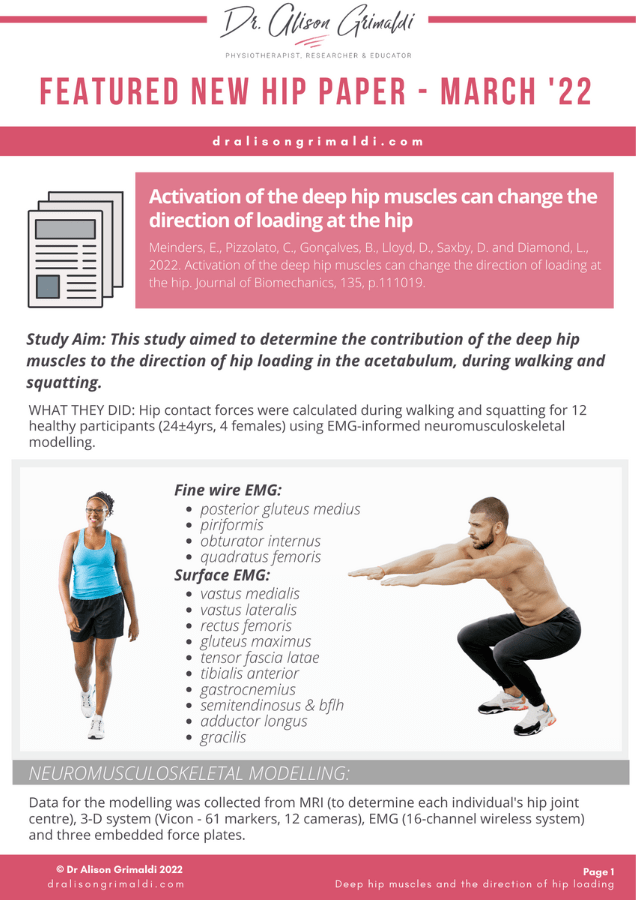
Featured New Hip Papers
Downloadable and printable Featured New Hip Papers resources. This new section will explore clinically relevant new hip papers, which positively contribute to our understanding of the Hip.
Includes: Multi-page full colour pdfs, with more to come.
Only available for Hip Academy Members.
Featured New Paper - January, 2022 - Acetabular Edge Loading During Gait Is Elevated by the Anatomical Deformities of Hip Dysplasia
Featured New Paper - February, 2022 - Relationship between hip muscle strength and hip biomechanics during running in people with femoroacetabular impingement syndrome
Featured New Paper - March, 2022 - Activation of the deep hip muscles can change the direction of loading at the hip
Featured New Paper - April, 2022 - Patients with cam-type FAI demonstrate increased change in bone-to-bone distance during walking
Featured New Paper - May, 2022 - Synovial inflammation in osteoarthritis - Review
Featured New Paper - June 2022 - Do femoral version abnormalities play a role in hip function of patients with hip pain?
Featured New Paper - July 2022 - MRI findings of ischio-femoral impingement after total hip arthroplasty are associated with increased femoral antetorsion
Featured New Paper - August 2022 - The association between statistical shape modeling-defined hip morphology and features of early hip osteoarthritis
Featured New Paper - September 2022 - Hip impingement location in maximal hip flexion in patients with FAI, with and without femoral retroversion
Featured New Paper - October 2022 - Criteria for Return to Play after hip arthroscopy in the treatment of FAI: A systematic review
Featured New Paper - November 2022 - Groin pain of neurological origin as a differential diagnosis of FAI
Featured New Paper - December 2022 - Mediators and moderators of education plus exercise on perceived improvement in individuals with gluteal tendinopathy
Featured New Paper - January 2023 - The LEAP education and exercise program for gluteal tendinopathy improves quality-of-life and is cost effective
Featured New Paper - February 2023 - The relationship between anterior gluteus minimus fatty infiltrate and gait parameters in females with hip osteoarthritis
Featured New Paper - March 2023 - The Oxford consensus on primary cam morphology and femoroacetabular impingement syndrome: Part 1: definitions, terminology, taxonomy & imaging outcomes
Featured New Paper - April 2023 - Gluteal muscle forces during hip-focused injury prevention and rehabilitation exercises
Featured New Paper - May 2023 - Predicting clinical success or failure after surgical repair of gluteus medius &/or minimus tendon tears
Featured New Paper - June 2023 - Pain, function, & quality of life in adults undergoing PAO for hip dysplasia
Featured New Paper - July 2023 - Hip pain & movement dysfunction associated with non-arthritic hip joint pain
Featured New Paper - August 2023 - The role of intratendinous pressure in the pathogenesis of tendon pathology
Featured New Paper - September 2023 - Analysis of cam location characteristics in FAIS patients demonstrates sex-specific differences
Featured New Paper - October 2023 - Diagnostic accuracy of clinical tests for assessing GTPS: A systematic review with meta-analysis
Featured New Paper - November 2023 - Complete capsular closure versus unrepaired hip capsules during hip arthroscopy
Featured New Paper - December 2023 - Effects of hip pain diagnostic labels and their explanations on beliefs about hip pain and how to manage it
Featured New Paper - January 2024 - The development of a core outcome set for gluteal tendinopathy
Featured New Paper - February 2024 - The effect of pelvic incidence on outcomes after hip arthroscopy for FAI & labra tears
Featured New Paper - March 2024 - Clinical tests for adductor- and pubic-related groin pain: reliability & positive test prevalence
Featured New Paper - April 2024 - Incontinence is an independent risk factor for complications after THA and TKA
Featured New Paper - May 2024 - Impacts of labral & capsular management 10+ years after hip arthroscopy
Featured New Paper - June 2024 - Association between GLA:D program outcomes and hip & knee replacement
Featured New Paper - July 2024 - Will you get what you want from physio-led treatment for FAIS?
Featured New Paper - August 2024 - Outcomes of Total Hip Arthoplasty in patients with Ehlers Danlos Syndrome
Featured New Paper - September 2024 - FAIS in middle-aged individuals is strongly associated with developing hip OA within 10 years
Featured New Paper - October 2024 - The ALPHA Alert: An aid to detect adult acetabular dyplasia
Featured New Paper - November 2024 - Postoperative effusion-synovitis is associated with poor clinical outcomes after arthroscopy for FAIS
Featured New Paper - December 2024 - Contributions of the abductor muscles to rotational and distractive stability of the hip
Featured New Paper - January 2025 - Does surgery or physio for FAIS slow the progression towards hip osteoarthritis?
Featured New Paper - February 2025 - Do functional tests discriminate between women with & without GTPS, & how do those with GTPS perform?
Featured New Paper - March 2025 - Are women less likely to return to sport compared to men following hip arthroscopy?
Featured New Paper - April 2025 - Influence of hip morphology on gluteal muscle biomechanics
Featured New Paper - May 2025 - Prevalence of Ischiofemoral Impingement (IFI) in younger adults with hip pain
Featured New Paper - June 2025 - Imaging findings from the LEAP gluteal tendinopathy clinical trial
Featured New Paper - July 2025 - Understanding relationships between acetabular & femoral orientation in dysplasia
Featured New Paper - August 2025 - Evaluation of Clinical Tests to Diagnose Iliopsoas Tendinopathy
Featured New Paper - September 2025 - Anatomic study of hip pericapsular muscle arrangement on the joint capsule
Featured New Paper - October 2025 - The Broken Wing Sign: A New Clinical Test to Detect Gluteus Medius Pathology
Featured New Paper - November 2025 - The Copenhagen Adduction Exercise: Effects on performance & injury prevention
Featured New Paper - December 2025 - American Physical Therapy Association: Clinical Practice Guidelines: Hip Pain & Mobility Deficits, Hip Osteoarthritis: Revision 2025
Featured New Paper - January 2026 - Links between hip crepitus, pain, QoL and psychological features in footballers with hip/groin pain
Featured New Paper - February 2026 - Contraction of the Deep Hip Muscles Contribute to Hip Capsulo-Ligamentous Complex Tension: An in vivo ultrasound study
Featured New Paper - March 2026 - Functional Impact of Gluteal Tendinopathy: A secondary cross-sectional analysis of baseline data from the LEAP clinical trial
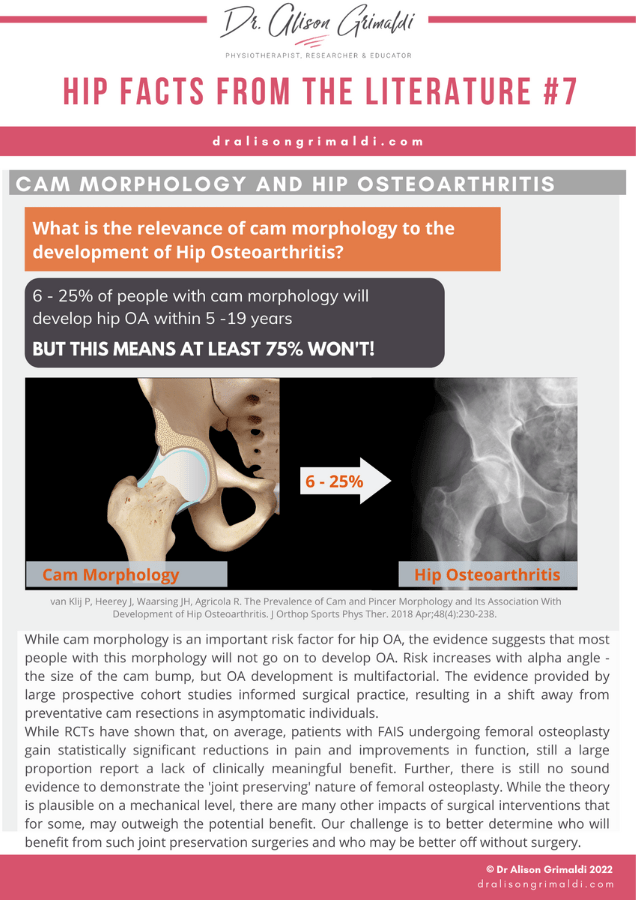
Hip Facts From the Literature
Downloadable and printable Hip Facts from Literature resources. This new section will explore clinically relevant hip facts from literature, which positively contribute to our understanding of the Hip.
Includes: Full colour pdfs, with more to come.
Only available for Hip Academy Members.
Hip Fact 1: Management of gluteal tendinopathy and adductor tendinopathy (i)
Hip Fact 2: Management of gluteal tendinopathy and adductor tendinopathy (ii)
Hip Fact 3: Ligamentum Teres Injury in FAIS (i)
Hip Fact 4: Ligamentum Teres Injury in FAIS (ii)
Hip Fact 5: Managing patients with anterior hip pain
Hip Fact 6: Push off and hip joint forces in gait
Hip Fact 7: Cam morphology and Hip Osteoarthritis
Hip Fact 8: Pincer morphology and Hip Osteoarthritis
Hip Fact 9: The multisystem nature of hypermobile Ehlers Danlos Syndrome
Hip Fact 10: Fatigue & hypermobile Ehlers Danlos Syndrome
Hip Fact 11: Why are those with acetabular dysplasia more likely to develop acetabular labral tears?
Hip Fact 12: Anterior acetabular edge loading during GAIT in acetabular dysplasia
Hip Fact 13: The influence of femoral morphology on hip adduction during running
Hip Fact 14: The influence of weight-bearing activity on development of femoral morphology
Hip Fact 15: Isolated trochanteric bursitis is RARE
Hip Fact 16: TFL hypertrophy is associated with fatty infiltration of the gluteus medius & minimus
Hip Fact 17: Cam regrowth is more common in adolescents after arthroscopic cam resection, particularly in males
Hip Fact 18: Repeat hip arthroscopy within 5 years more likely in adolescents who presented with acute injury
Hip Fact 19: The Gothic Arch Angle (GAA): A new imaging index of hip instability in acetabular dysplasia
Hip Fact 20: The PART... A New Clinical Test for Anterior Hip Instability
Hip Fact 21: Intra-articular Corticosteroid Injection significantly increases the risk of Rapidly Destructive Hip Disease
Hip Fact 22: Corticosteroid Injection within 3 months of hip replacement significantly increases risk of periprosthetic joint infection
Hip Fact 23: More evidence that capsular repair produces superior results after hip arthroscopy
Hip Fact 24: Healing of capsular repair after hip Arthroscopy is associated with clinical outcomes
Hip Fact 25: Ligamentum teres injury is associated with other joint pathology
Hip Fact 26: Ligamentum teres injury influences risk of requiring arthroscopic surgery
Hip Fact 27: The Influence of Pelvic Tilt on Acetabular Forces
Hip Fact 28: The Influence of Pelvic Tilt on Hip Muscle Contributions
Hip Fact 29: What patient rated outcome measure do you use for gluteal tendinopathy or GTPS?
Hip Fact 30: What physical function capacity measurement do you use for gluteal tendinopathy or GTPS?
Hip Fact 31: Femoral offset increases risk of lateral snapping hip
Hip Fact 32: Labral tears are prevalent in those with gluteal tendon tears
Hip Fact 33: The anterior hip capsule is thinner in dysplastic hips
Hip Facts 34: Femoral anteversion is associated with a thinner anterior capsule in patients with FAIS
Hip Facts 35: Professional ballet dancers have larger gluteal muscles than other athletes
Hip Facts 36: Professional ballet dancers have larger obturator externus muscles than other athletes
Hip Facts 37: Those with mild - moderate hip OA walk with reduced joint angles & moments
Hip Facts 38: Those with mild - moderate hip OA use less iliopsoas and more glute max force in gait
Hip Facts 39: Around 50% of physiotherapists may miss a diagnosis of hip OA
Hip Facts 40: For Hip & Knee Osteoarthritis, exercise has similar effects on pain & function to that of oral NSAIDs & paracetamol
Hip Facts 41:Corticosteroid injections increase risk of poorer outcomes after GTPS surgery
Hip Facts 42:Most partial-thickness gluteal tendon tears do not progress over a mean of 6 years
Hip Facts 43: Adhesive capsulitis also occurs at the HIP
Hip Facts 44:Muscle pain at the lateral hip or buttock may be due to vascular claudication
Hip Facts 45:Low oestrogen levels may contribute to tendinopathy
Hip Facts 46:High oestrogen levels may contribute to joint injury and pain
Hip Facts 47: Iliocapsularis is hypertrophied in borderline dysplasia
Hip Facts 48: Iliocapsularis atrophy occurs following capsular plication in borderline dysplasia
Hip Facts 49: Clinical tests correlate with groin pain severity on PROMs
Hip Facts 50: Copenhagen 5 Sec Squeeze is a valid indicator of groin pain severity
Hip Facts 51:Obesity may contribute to tendinopathy
Hip Facts 52:Diabetes mellitus may contribute to tendinopathy
Hip Facts 53: Anterior & posterior hip osteoarthritis (OA)may be underestimated on XRay
Hip Facts 54: Radiofrequency ablation is available for chronic hip pain related to osteoarthritis
Hip Facts 55: Iliopsoas impingement is not always the cause of anterior hip pain post THA
Hip Facts 56: Iliopsoas fibrosis may cause anterior hip pain post hip replacement
Hip Facts 57: Is weather a risk factor for musculoskeletal pain? Perhaps not!
Hip Facts 58: The ligamentum teres plays a significant role in maintaining the suction seal of the hip
Hip Facts 59: Posterior undercoverage of the femoral head has been linked with pain
Hip Facts 60: The femoral head is relatively less covered by the acetabulum anteriorly
Hip Facts 61: Slipped Capital Femoral Epiphysis occurs in females & young athletes too
Hip Facts 62: Paediatric hip injuries have different features in females and males
Hip Facts 63: Sagittal Pelvic Tilt directly influences the Ischiofemoral Space (IFS)
Hip Facts 64: Hip External Rotation reduces the Ischiofemoral Space (IFS)
Hip Facts 65: Ligamentum teres tears are linked with microinstability in borderline dysplasia
Hip Facts 66: Combined anteversion is linked with microinstability in borderline dysplasia
Hip Facts 67: A common reason for failed hip arthroscopy is scarring between the capsule & the labrum
Hip Facts 68: Circumduction mobilisation substantially reduces the risk of adhesions post hip arthroscopy
Hip Facts 69: Larger femoral neck - shaft angle (NSA) reduces the ischiofemoral space
Hip Facts 70: Larger intertuberous distance is associated with Ischiofemoral Impingement
Hip Facts 71: Femoral head translations occur naturally during motion, most consistently in flexion & abduction
Hip Facts 72: Femoral head translations are influenced by bony anatomy
Hip Facts 73: Excessive femoral anteversion is more than typical twist in the femur
Hip Facts 74: Femoral retroversion is less than typical twist in the femur
Hip Facts 75: Sciatic nerve irritation may occur at the interface between piriformis & the OIG complex
Hip Facts 76: The sciatic nerve is naturally tethered to the OI in the deep gluteal space
Hip Facts 77: Upper buttock & lower back pain can be caused by superior cluneal neuralgia
Hip Facts 78: Middle cluneal neuralgia may masquerade as sacroiliac joint pain
Hip Facts 79: Mid-thigh to chest during hip flexion increases the chances of lower limb hypermobility
Hip Facts 80: Lateral knee to the bed during hip ABD-ER increases the chances of lower limb hypermobility
Hip Facts 81: Clinical tests for Developmental Dysplasia of the Hip miss at least 50%
Hip Facts 82: Universal US screening for Developmental Dysplasia of the Hip is the best option
Hip Facts 83: Femoral anteversion is highest at birth, then gradually reduces until growth plate closure
Hip Facts 84: Femoral neck-shaft angle is greatest at birth, then gradually reduces during growth
Hip Facts 85: The anterior acetabular wall should pass through the middle third of the femoral head radius
Hip Facts 86: The posterior acetabular wall should pass through the middle third of the femoral head diameter
Hip Facts 87: The anterior hip capsule and Iliofemoral ligament provide critical anterior hip stability
Hip Facts 88: The pubofemoral ligament reinforces the anterior-inferior region of the hip capsule
Hip Facts 89: The posterior hip capsule and Ischiofemoral ligament provide critical posterior hip stability
Hip Facts 90: The zona orbicularis encircles the femoral head providing resistance to distraction
Hip Facts 91: Hip ADD weakness is a potential risk factor for groin pain, but ADD-ABD ratio is NOT
Hip Facts 92: The weighted isometric Copenhagen Adduction exercise generates large ADD torques
Hip Facts 93: Pincer morphology is not associated with hip osteoarthritis unless hip pain is present
Hip Facts 94: Cam type FAIS is strongly associated with increased odds of hip OA within 10 years
Hip Facts 95: Effect of increasing forward trunk lean during stair ascent
Hip Facts 96: Stride width in gait influences joint forces - moments - and muscle activity
Hip Facts 97: Hip crepitus is prevalent in football players with hip pain
Hip Facts 98: Adults with hip pain worry about hip crepitus
Hip Facts 99: Gluteal tendinopathy is common in those with Hip OA, and impacts outcomes of surgery
Hip Facts 100: We need high quality studies of interventions for gluteal tendon tears
Hip Facts 101: No differences between: Education + Exercise versus, Education + Shockwave for Proximal Hamstring Tendinopathy
Hip Facts 102: Shockwave therapy is easier to comply with than an exercise program for PHT but lacks the physical conditioning benefits
Hip Facts 103: The AB-HEER test is one of the most accurate tests for hip microinstability
Hip Facts 104: The Prone Instability test is useful for ‘ruling in’ hip microinstability
Hip Facts 105: Deep Gluteal Syndrome Entrapment Zone 1 Sciatic Notch – Piriformis
Hip Facts 106: Deep Gluteal Syndrome Entrapment Zone 2 Gemelli-OI Interface