
The posterior acetabular wall should pass through the middle third of the femoral head diameter
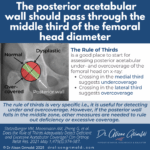
The rule of thirds is very specific i.e., it is useful for detecting under and overcoverage. However, if the posterior wall falls in the middle zone, other measures are needed…
Read MoreThe anterior acetabular wall should pass through the middle third of the femoral head radius
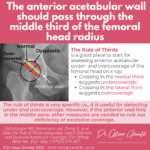
The rule of thirds is very specific i.e., it is useful for detecting under and overcoverage. However, if the anterior wall falls in the middle zone, other measures are needed…
Read MoreFemoral neck-shaft angle is greatest at birth, then gradually reduces during growth
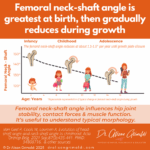
Femoral neck-shaft angle influences hip joint stability, contact forces AND muscle function. It’s useful to understand typical morphology.
Read MoreFemoral anteversion is highest at birth, then gradually reduces until growth plate closure
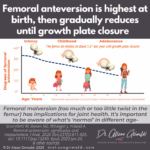
Femoral malversion (too much or too little twist in the femur) has implications for joint health. It’s important to be aware of what’s ‘normal’ in different age-groups.
Read MoreUniversal US screening for Developmental Dysplasia of the Hip is the best option
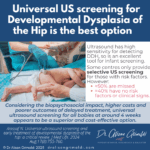
Considering the biopsychosocial impact, higher costs and poorer outcomes of delayed treatment, universal ultrasound screening for all babies at around 4 weeks appears to be a superior and cost-effective option.
Read MoreClinical tests for Developmental Dysplasia of the Hip miss at least 50%
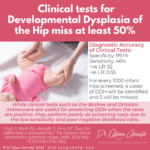
While clinical tests such as the Barlow and Ortolani maneuvers are useful for predicting DDH when the tests are positive, they perform poorly as screening tests due to the low…
Read More